My Research Area
Groundwater is a vital part of the hydrological cycle, sustaining ecosystems, agriculture, and human needs, yet it is highly sensitive to both short-term climate variability and long-term climate change. My research focuses on simulating the evolution of groundwater levels across North America from 1800 CE to 2300 CE using the Water Table Model (WTM) — a physics-based numerical framework that couples groundwater flow with dynamic surface-water processes. The model integrates multiple climate datasets, including paleoclimate reconstructions (TraCE-21ka), historical observations (TerraClimate and CMIP6-historical), and future projections (CMIP6 SSP1-2.6, SSP2-4.5, and SSP5-8.5), all bias-corrected and downscaled to a high-resolution 1 km grid. This multi-century transient simulation captures both natural variability and climate-induced change, allowing for the examination of how groundwater responds to temperature, precipitation, and evapotranspiration patterns over time.
The project has three major goals: first, to simulate seasonal water-table variability and identify how climate forcing drives present-day groundwater fluctuations; second, to evaluate future groundwater responses under different emission scenarios to determine the range of possible climate impacts on water availability; and third, to identify regions most vulnerable to groundwater depletion and assess their management implications. Extending the analysis beyond the 21st century provides the first continuous, high-resolution reconstruction of continental water-table dynamics over millennial timescales. The results will enhance understanding of groundwater–climate interactions, reveal spatial-temporal patterns of depletion and recharge, and offer a scientific foundation for sustainable water-resource management across North America.

Simulated water table depth for year 2024.
My research focuses on characterizing karst aquifers in the Hashtgerd Basin, located in northern Iran. Given that around 15% of the basin is covered by karst rocks, which supply approximately 30% of the region's drinking water, it is essential to understand the dynamics and behavior of these aquifers. The study employs hydrodynamical, hydrochemical, and isotopic investigations to analyze water from springs, qanats, and alluvial wells during both wet and dry seasons. This multi-disciplinary approach reveals that the dominant water types are calcium and magnesium-bicarbonate, arising from the dissolution of calcite and dolomite. The isotopic content of the water suggests that the aquifers are primarily recharged by precipitation and snowmelt, without significant evaporation processes. Understanding these aquifers' recharge and flow mechanisms is key to ensuring sustainable water management in the region.
The primary objectives of this research are to delineate the hydrogeological framework of karst aquifers and their interaction with surrounding alluvial aquifers. By analyzing the water chemistry and isotopic content, the study aims to identify the sources and pathways of groundwater flow, which can inform the development of a comprehensive drinking water safety plan. Moreover, the study highlights the potential impact of activities such as drilling in downstream areas, which could disrupt the natural discharge of karst water, providing crucial insights for sustainable resource management and policy-making.
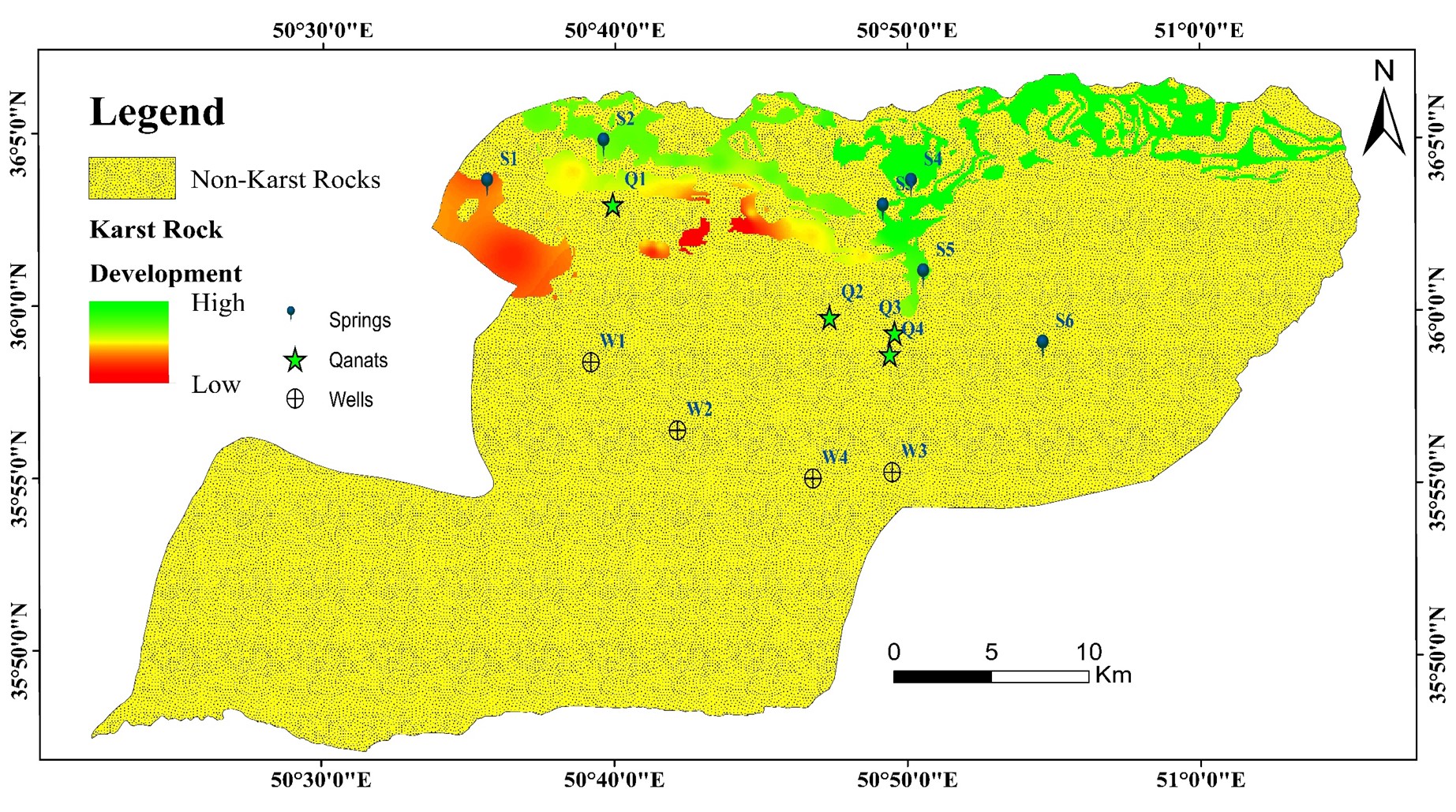
Characterizing karst aquifers through hydrodynamical and hydrochemical methods.
In my research on rainwater harvesting, I aim to address the growing challenges of water scarcity in arid regions, where uneven rainfall distribution and high water demand for agriculture and human consumption present significant issues. Focusing on a case study in Kariyan village, Hormozgan province, Iran, my work explores the feasibility of constructing a reservoir capable of storing approximately one million cubic meters of runoff water. To identify the best location and optimize the reservoir’s design, I integrate remote sensing technologies with field surveys, assessing key parameters such as rainfall patterns, evaporation rates, water pricing, and soil permeability. This approach allows for a comprehensive understanding of how to effectively manage water resources, offering sustainable solutions for regions facing similar water challenges.
The objectives of this research are multifaceted. Firstly, I strive to pinpoint optimal sites for rainwater harvesting infrastructure by analyzing environmental and geographic data through GIS and remote sensing. Secondly, my work examines the engineering and environmental parameters that influence the reservoir's functionality, such as topography, local soil characteristics, and the proximity to areas of water demand. Ultimately, my goal is to contribute to sustainable water resource management practices that not only improve agricultural productivity but also support the livelihoods and ecosystems in water-scarce areas. By leveraging efficient water conservation strategies, this research aims to facilitate the sustainable use of rainwater as a vital resource for communities and agriculture.
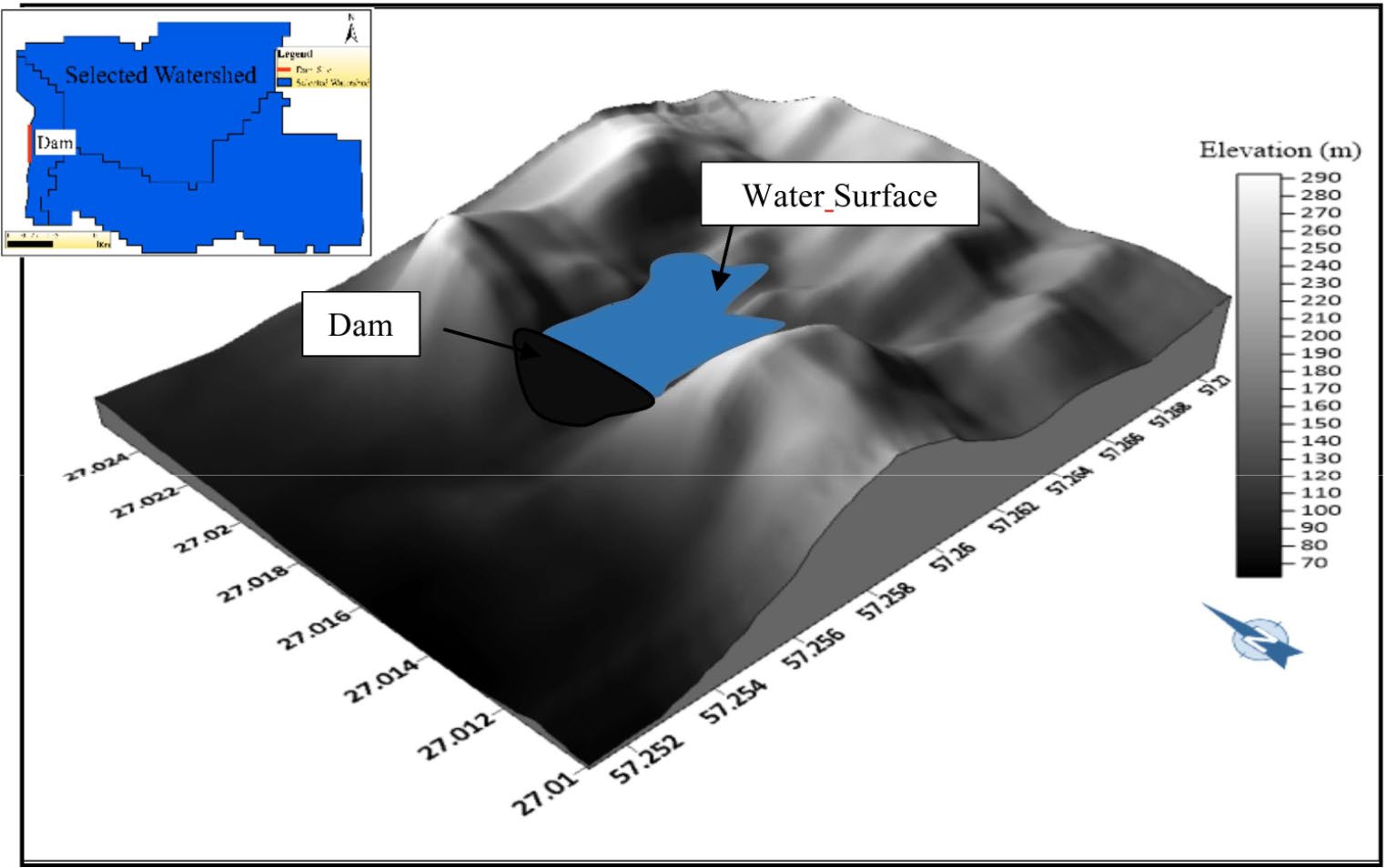
Sustainable rainwater harvesting techniques for adaptation to water scarcity.